

Morocco is a land where faith and beauty meet at every turn. Beyond its golden Sahara dunes and bustling souks lies a deep Islamic heritage that has shaped the country for well over a thousand years. From towering minarets that call the faithful to prayer, to ancient centres of learning and serene medinas, Morocco offers the Muslim traveller a journey rich in history, spirituality and wonder.
This guide takes you through the most remarkable Islamic sites in Morocco and what makes each one special. It is written with the thoughtful traveller in mind, including British Muslims who enjoy discovering Islamic heritage abroad and who often plan such trips alongside sacred journeys, whether that means exploring Fes and Marrakech or booking all-inclusive Umrah packages for the pilgrimage to Makkah. Whichever way your travels take you, Morocco’s spiritual treasures are unforgettable.
Casablanca and the magnificent Hassan II Mosque
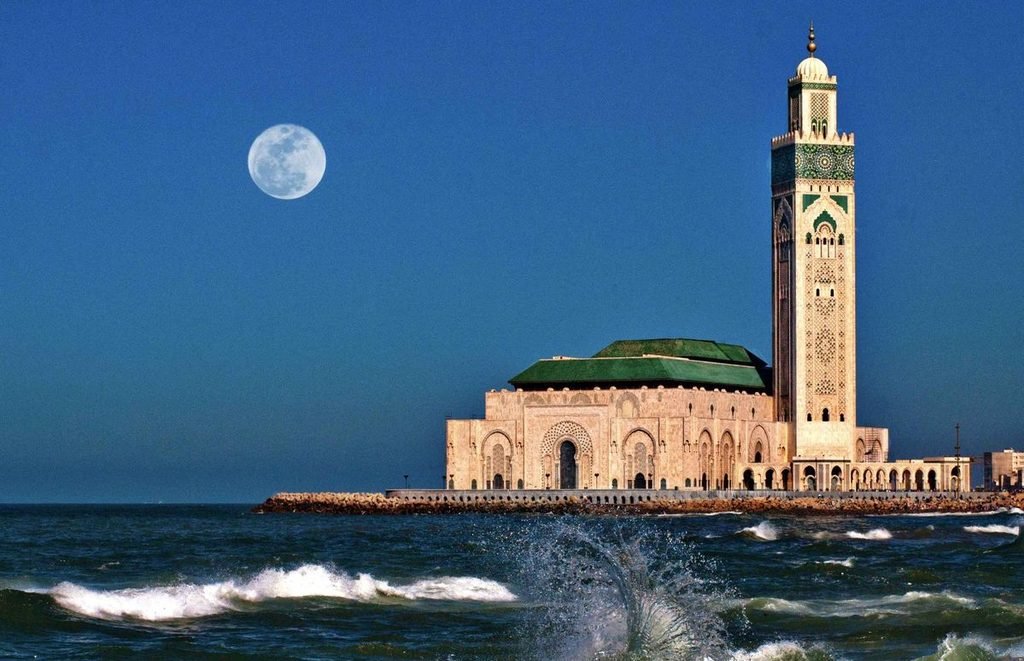
No exploration of Morocco’s Islamic heritage is complete without the Hassan II Mosque in Casablanca. Completed in 1993, it is one of the largest mosques in the world, and its minaret, standing at 210 metres, is among the tallest religious structures anywhere. Perched on the edge of the Atlantic Ocean, part of the mosque is built over the water, creating a breathtaking sight at sunset.
What makes this mosque so special is not only its scale but its craftsmanship. Thousands of Moroccan artisans worked on its intricate mosaics, carved cedar wood and marble floors. Unusually, it is one of the few mosques in Morocco open to non-Muslim visitors on guided tours, making it a wonderful introduction to Islamic art and architecture for travellers of all backgrounds.
Fes: the spiritual and intellectual heart
If any city captures the soul of Islamic Morocco, it is Fes. Founded in the late eighth century, Fes is home to the University of al-Qarawiyyin, recognised by many as the oldest continuously operating university in the world. It was established in 859 by Fatima al-Fihri, a remarkable Muslim woman whose legacy still inspires today.
The medina of Fes, a UNESCO World Heritage Site, is a maze of narrow lanes, historic madrasas and hidden mosques. Walking through it feels like stepping back in time. The Al-Attarine Madrasa, with its dazzling geometric tilework and carved plaster, is a masterpiece of Marinid architecture and a highlight for anyone interested in Islamic design.
Marrakech and the Koutoubia Mosque
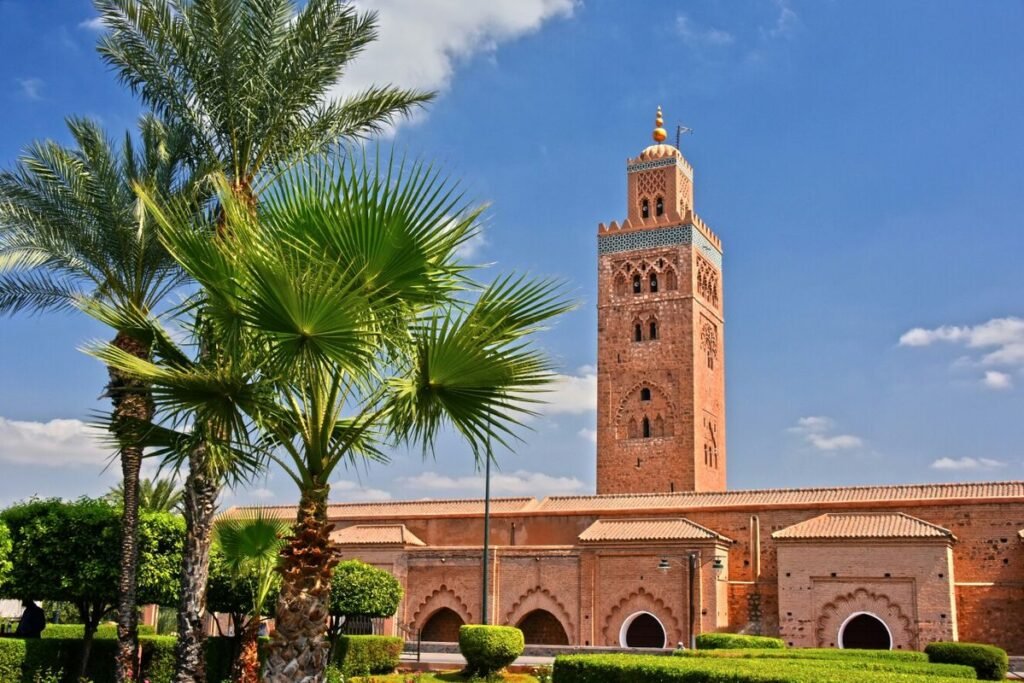
Marrakech, the famous Red City, is home to the iconic Koutoubia Mosque, whose elegant minaret has watched over the city for more than 800 years. Built in the twelfth century, the Koutoubia is a masterpiece of Almohad architecture, and its design is said to have inspired other great towers across the Islamic world.
While the mosque interior is reserved for worshippers, its gardens and surroundings are open to all and offer a peaceful escape from the lively souks nearby. As the call to prayer echoes across the city at dusk, visitors often describe a profound sense of calm settling over Marrakech, a reminder of the faith that beats at the heart of Moroccan life.
Planning a heritage journey through Morocco
Exploring Morocco’s Islamic sites takes a little planning, as they are spread across several cities. Many travellers combine a cultural tour with a desert adventure, moving from the imperial cities to the Sahara over the course of a week or more. Here are a few practical tips for a smooth and respectful trip:
- Dress modestly, especially near mosques and in traditional medinas, out of respect for local customs.
- Learn a few Arabic or French phrases, as both are widely spoken and a little effort is warmly received.
- Travel with a knowledgeable local guide, who can bring the history and stories of each site to life.
- Plan around prayer times, which shape the daily rhythm of Moroccan towns and cities.
Spring and autumn are the most comfortable seasons to travel, avoiding the fierce summer heat. Many faith-minded travellers who visit Morocco also plan their pilgrimage in the same year, and those researching good value Umrah 2027 packages from UK often find it wise to map out their spiritual travel calendar early, balancing a cultural trip through Morocco with the sacred journey to Makkah and Madinah. Planning ahead means you can enjoy both without feeling rushed.
The medinas: living Islamic history
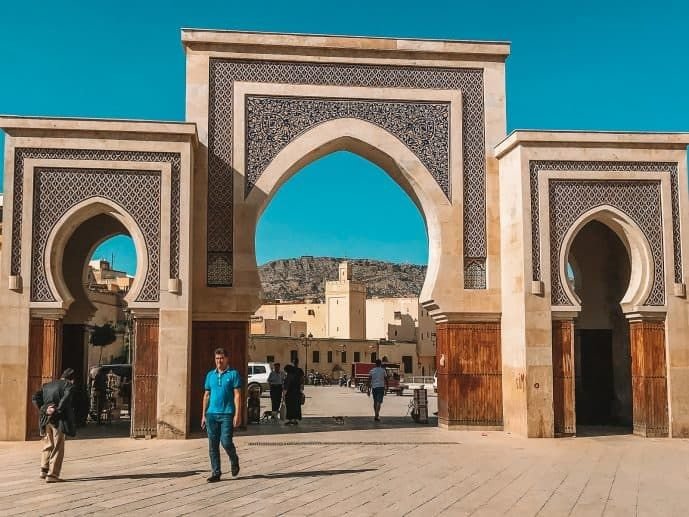
Beyond the grand mosques, Morocco’s medinas are where its Islamic heritage truly comes alive. These old walled quarters, found in Fes, Marrakech, Meknes and beyond, have been centres of trade, learning and worship for centuries. Wandering their alleys, you pass fountains decorated with mosaic tiles, workshops where artisans practise crafts handed down through generations, and quiet mosques tucked between the shops.
The medinas reflect the Islamic principle of community, where the mosque sits at the centre of daily life and everything radiates outward from it. For the traveller willing to slow down and observe, these neighbourhoods offer a genuine window into how faith and everyday life have been woven together in Morocco for over a millennium.
Meknes and the legacy of Moulay Ismail
Often overlooked in favour of its more famous neighbours, Meknes is a treasure for those interested in Islamic history. This imperial city rose to prominence under Sultan Moulay Ismail in the seventeenth century, and its grand gates, walls and the beautiful Bou Inania Madrasa reflect a golden age of Moroccan Islamic architecture.
The mausoleum of Moulay Ismail is one of the few religious monuments in Morocco that welcomes non-Muslim visitors, offering a rare glimpse of the intricate beauty found inside such sacred spaces. Meknes rewards the curious traveller with quieter streets and a more relaxed pace than the busier cities.
Why a Moroccan heritage journey stays with you
There is something deeply moving about experiencing Islam in a country where it has flourished for so long. From the Atlantic waves lapping beneath the Hassan II Mosque to the ancient lecture halls of al-Qarawiyyin, Morocco tells the story of a faith that shaped civilisations, nurtured scholarship and inspired extraordinary art.
For Muslim travellers, such a journey is a reminder of the richness of Islamic history beyond the Holy Cities. For travellers of all faiths, it is a chance to appreciate a culture built on hospitality, learning and beauty. Either way, Morocco leaves a lasting impression that stays with you long after you return home.
Frequently asked questions
Can non-Muslims visit mosques in Morocco?
Most mosques in Morocco are reserved for worshippers, but a few, including the Hassan II Mosque in Casablanca, welcome non-Muslim visitors on guided tours. Always dress modestly and follow local guidance.
What is the oldest university in Morocco?
The University of al-Qarawiyyin in Fes, founded in 859, is recognised as one of the oldest continuously operating universities in the world.
When is the best time to visit Morocco for a heritage trip?
Spring, from March to May, and autumn, from September to November, offer the most pleasant weather for exploring cities and the desert alike.
Is Morocco a good destination for Muslim travellers?
Yes, Morocco is a Muslim-majority country with mosques, halal food and prayer facilities widely available, making it a comfortable and welcoming destination for Muslim visitors.
Final thoughts
Morocco is far more than a desert adventure. It is a living museum of Islamic heritage, where every city tells a story of faith, art and community. From the soaring minarets of Casablanca and Marrakech to the ancient medinas of Fes and Meknes, the country offers a spiritual journey as memorable as any of its landscapes.
Plan your trip thoughtfully, travel with respect, and allow time to simply absorb the atmosphere of these remarkable places. Whether Morocco is a destination in itself or one chapter in a wider year of spiritual travel, its Islamic heritage is a gift well worth discovering.
Leave a Reply